
盆景大師
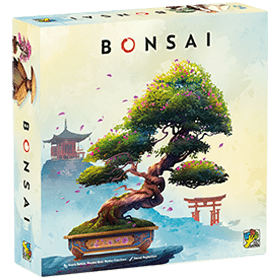 日文術語“盆景”的意思是“種植在盆中”。盆景是一件活生生的藝術品,是一種完美的微型植物,在所有方面都與其全尺寸的植物相同,但要小幾倍。
在盆景大師中,玩家扮演匠心獨運的盆景大師種植自己的盆景,栽培出最優秀盆景者,可以獲得在御園展示其作品的尊榮成就。
玩家人數: 1 - 4
遊戲歷時: 15 mn
複雜度 2 / 5
在線上玩 盆景大師 以及 1412 款其他遊戲。
無需下載──直接用你的網路瀏覽器玩。
與你的朋友以及全世界成千上萬的玩家們。
免費。


在線上玩 盆景大師 以及 1412 款其他遊戲。
無需下載──直接用你的網路瀏覽器玩。
與你的朋友以及全世界成千上萬的玩家們。
免費。
規則摘要
Overview
Build your Bonsai with Tiles whilst collecting cards in order to play different and more tiles per turn, meanwhile decide which goals you wish to pursue and which you want to permanently ignore
Turn
On your turn, either Meditate or Cultivate, then check if you've Completed a Goal
Meditate
Take a faceup card of your choice
Below the card's position are symbols depicting how many and what type or tile you can additionally take
Some positions give no tiles, some an option between one and another tile, and some give multiple tiles
All remaining cards are slid to the right, and a new card is drawn from the deck to refill the market
• Growth cards are played to the right of your Seishi, fanned out to keep the symbol on the sidebar visible
• Tool cards are played to the left of your Seishi, fanned out to keep the symbol on the sidebar visible.
• Helpers and Masters have instant one off effects, then are placed facedown next to you in a pile
• Parchments have end game effects, and are placed facedown in the same pile as Helpers and Masters
Regardless of how many tiles you gained, you can only retain 5 tiles at the end of your turn. You can extend this limit by acquiring Tool cards.
Cultivate
Based on what cards are in your display, including your starting Seishi card, you are allowed to play certain tiles as depicted
Each depicted tile lets you place one of its type, the starting Seishi allows a player to place 1 Wood, 1 Leaf, &/or 1 Any
• Wood needs to be placed with one edge touching the edge of another Wood
• Leaf needs to be placed with one edge touching the edge of a Wood
• Flower needs to be placed with one edge touching the edge of a Leaf
• Fruit needs to be placed adjacent to two Leaf tiles which form an intersection, furthermore a Fruit CANNOT touch the edge of another Fruit
Before placement, if your layout does not allow for a Wood placement (regardless of what you wish to place) you can discard parts of your Bonsai in the least disruptive manner in order to make Wood placement possible
Complete a Goal
If you meet or exceed the requirements of a goal, you are able to claim it or skip it
You can only claim one goal of each type, so once one is claimed you cannot claim a better version
If you choose to skip a goal you could have claimed, it is no longer available for you to claim at a later point, you must instead try to claim a harder goal worth more points
Game End
When the deck is depleted and the final card revealed, all players including the player who caused this get 1 final turn
Hand Tiles are worth nothing, tiles in the Bonsai are scored as follows
• Wood is worth 0
• Leaf is worth 3 each
• Flowers are worth 1 for each side NOT adjacent to another tile (so worth 0 - 5 each)
• Fruit is worth 7 each
• Reveal your Parchments and score them as detailed, then add to this any Goal cards collected
The player with the most points, wins!
If tied, the player furthest from the start player, wins!
Settings
The tokonoma variant puts all of the Parchment cards in the top half of the deck.
Cards
Growth cards stay in front of you for the rest of the game. When you Cultivate, you may place all tiles represented on your Growth cards in addition to the ones you can place thanks to your Seishi tile. If you have multiple copies of the same card, their effects add up. Choose freely the order in which you place the tiles. Each placement is optional.
Tool cards stay in front of you for the rest of the game. For each copy of this card you have, at the end of each turn, you can keep two additional tiles in your personal supply. Example: If you have two of these cards, you can keep up to 4 more tiles in your personal supply, in addition to the 5 tiles you can keep thanks to your Seishi tile, for a total of 9.
Helper cards are activated once when you take them, then they are kept face down in a pile beside your Seishi tile. Place in your bonsai one tile of your choice, and/or one tile of the type shown, taken from your personal supply (you may place tiles you just took along with this card).
Master cards are activated once when you take them, then they are kept face down in a pile beside your Seishi tile. Take the tiles shown on the card from the common supply. Take these tiles in addition to the tiles you would normally take depending on the position of the card on the board. Remember to respect your capacity limit at the end of your turn
Parchment Cards are kept face down in a pile beside your Seishi tile. At the end of the game, each Parchment card awards points depending on the depicted images, as follows:
- 1 point for each wood tile in your bonsai (including the starting bud)
- 1 point for each leaf tile in your bonsai
- 2 points for each flower tile in your bonsai
- 2 points for each fruit tile in your bonsai
- 2 points for each Growth card you have
- 2 points for each Helper card you have
- 2 points for each Master card you have